Challenge
During the pandemic, social distancing and stay-at-home regulations changed the way young people spent their time. Outdoor activities were limited, school and work routines moved online, and social interaction became heavily dependent on digital platforms. For many Millennials and Gen Z audiences, staying at home for a long period of time created boredom, fatigue, and the need for new sources of entertainment.
For Joyday, this situation created both a challenge and an opportunity. As an ice cream brand, Joyday needed to stay relevant during a time when people’s lifestyle and consumption habits were changing. The brand could no longer depend only on regular outdoor moments, impulse purchases, or on-the-go consumption occasions. Joyday needed to find a way to become part of people’s at-home entertainment routine.
At the same time, many brands were talking about the pandemic in similar ways. Messages about safety, staying at home, and adapting to the new normal were everywhere. This created topic fatigue among consumers, especially younger audiences who were already oversaturated with pandemic-related communication.
The challenge was to create a campaign that acknowledged the stay-at-home situation without making the message feel heavy, repetitive, or boring. Joyday needed to interact with its audience in a more intimate and entertaining way, using passion points that were still relevant to young people during the pandemic.
The main challenge was clear: how could Joyday turn the stay-at-home situation into a joyful brand moment that could attract youth audiences, increase engagement, and build stronger relevance?
Strategy
Redcomm developed the campaign #Joydirumah, a simple and playful idea that turned “stay-at-home” into “joy-at-home.” The strategy was to position Joyday as a brand that could bring fun, laughter, and entertainment into people’s homes during a difficult period.
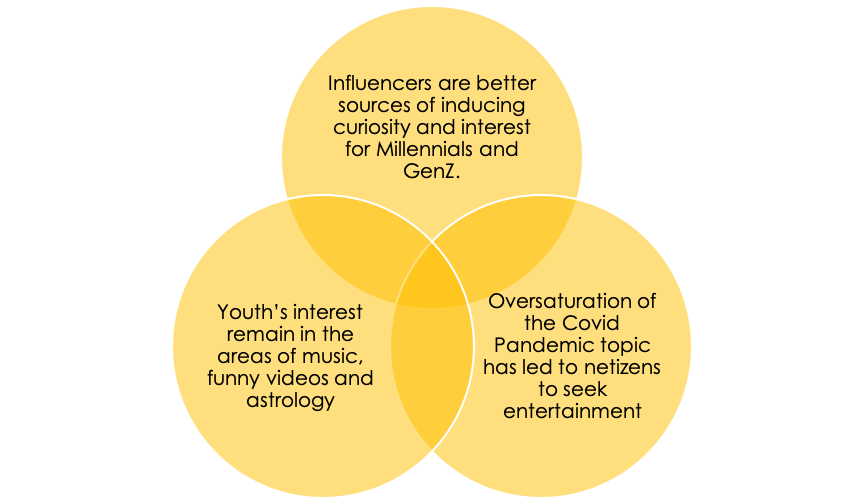
The campaign was built around the insight that young audiences were still actively looking for light entertainment while staying at home. Even when mobility was limited, their interests in music, funny videos, astrology, digital content, and influencer culture remained strong. These passion points became the foundation for the campaign.
Instead of focusing only on product promotion, the strategy was to create entertainment-led content that could make Joyday feel closer to its audience. The brand needed to be present in the same digital spaces where young people were spending their time, and it needed to communicate in a tone that felt fun, light, and culturally relevant.
Influencers became an important part of the strategy. For Millennials and Gen Z, influencers are often more effective in creating curiosity, interest, and relatability. Their presence helped the campaign feel more natural and less like a standard brand message.
The campaign also needed to avoid the oversaturation of serious pandemic topics. Rather than reminding people about the limitations of staying at home, #Joydirumah focused on what people could still enjoy at home. It reframed the situation from restriction into entertainment.
Through this strategy, Joyday became more than an ice cream brand. It became a companion for at-home moments, helping young people find small bursts of happiness while they stayed indoors.
Execution
The campaign was executed through digital content and influencer-led activities that brought the #Joydirumah idea to life. Joyday created content around entertainment, comedy, music, astrology, and other youth passion points that remained relevant during the pandemic.
The execution focused on making the campaign feel light, fun, and easy to engage with. Instead of delivering a heavy pandemic message, Joyday used a cheerful visual identity and playful communication to encourage people to enjoy their time at home.
Influencers helped amplify the campaign by creating content that matched their own style while still carrying the #Joydirumah message. This made the campaign feel more personal and relatable to young audiences. Through influencer participation, Joyday was able to enter youth conversations in a more organic way.
The campaign also used social media as the main platform to reach audiences who were spending more time online. Content was designed to be snackable, entertaining, and easy to share. This helped Joyday build interaction with its audience and create a sense of digital togetherness during a time when physical interaction was limited.
The campaign message, “Berasakan rasanya ketawa di rumah”, encouraged people to experience laughter at home. This message connected naturally with the brand’s joyful personality and made the campaign feel emotionally relevant without being too serious.
By combining influencer content, entertainment themes, and playful brand messaging, Joyday created a campaign experience that helped people see staying at home in a more positive way. The campaign did not try to ignore the reality of the pandemic, but it offered a lighter emotional response to it.
Redcomm’s role included shaping the campaign idea, identifying relevant youth passion points, developing the communication direction, and helping Joyday create content that could connect with Millennials and Gen Z audiences in a relatable way.
Results
The #Joydirumah campaign successfully helped Joyday strengthen its relevance among young audiences during the pandemic. By turning stay-at-home moments into joyful at-home entertainment, the campaign was able to create stronger engagement and brand visibility.
The campaign generated more than 30% increase in followers, showing that the content successfully attracted new audiences and encouraged people to connect with Joyday’s social media presence. This result indicated that the campaign was able to make the brand more visible and appealing to younger consumers.
The campaign also achieved 34,132 total views in just 30 minutes, showing strong initial traction and audience interest. This fast performance reflected the relevance of the campaign content and the effectiveness of using entertainment-led communication during the stay-at-home period.
Beyond digital performance, the campaign also gained industry recognition by winning the Marketers OmniBrands of the Year 2020 award. This recognition showed that #Joydirumah was not only successful as a social media campaign, but also stood out as a strong brand initiative during a challenging period.
Overall, #Joydirumah demonstrated how a brand can stay relevant during a crisis by understanding what its audience truly needs. Joyday did not only respond to the pandemic with a standard stay-at-home message. It created a more positive and entertaining way for young people to experience life at home.
By combining youth passion points, influencer participation, social media entertainment, and a playful brand message, Joyday turned a difficult situation into a joyful brand opportunity. The campaign proved that even when people could not go out, brands could still create meaningful and fun moments inside the home.